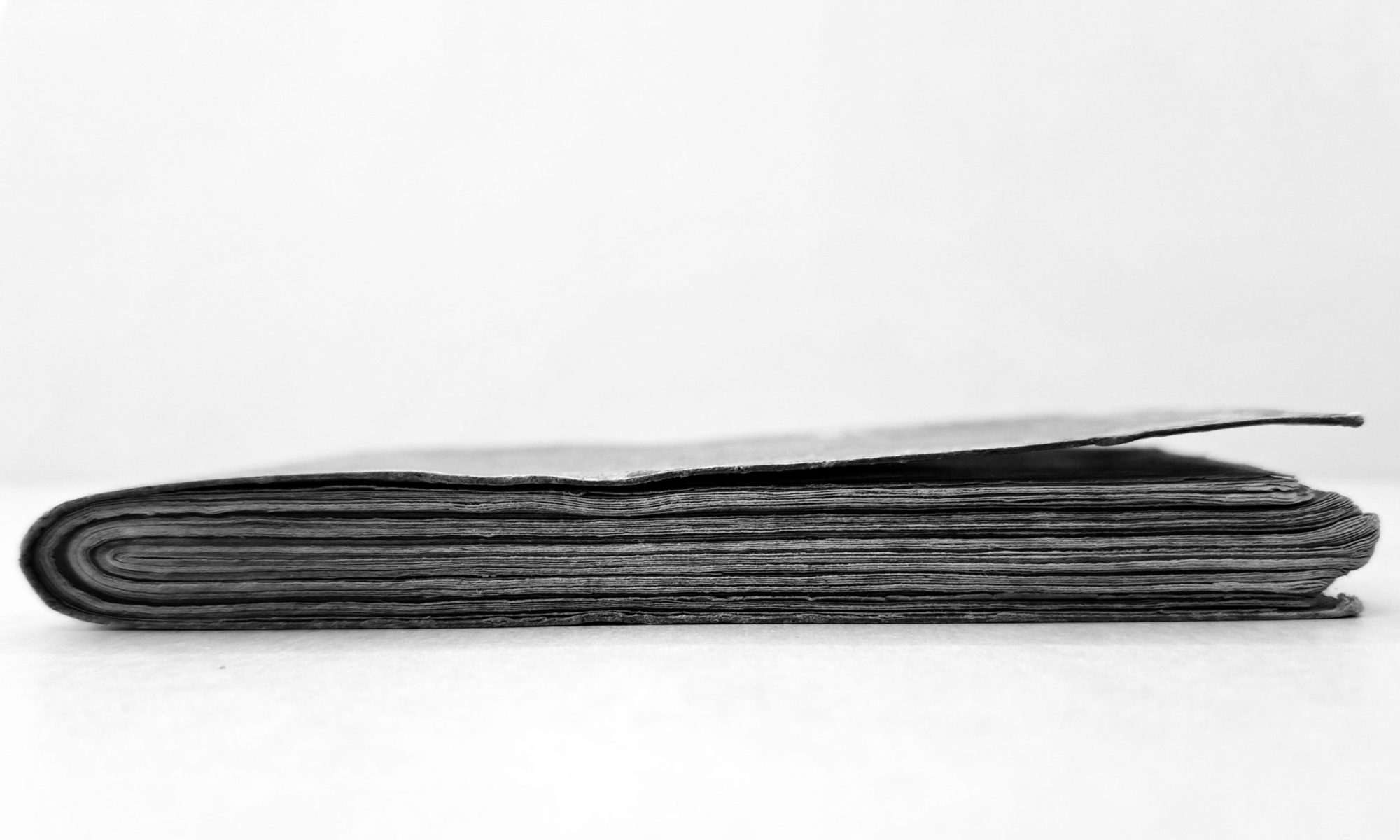
| Author | Collection | Camps | Date of Creation | Form | Pages | Summary |
|---|---|---|---|---|---|---|
| Vermes, Buchi | Yad Vashem Archive | Strasshof (Austria), Znaim/Znojmo (Czechia), Pohořelice/Pohrlitz ( Czechia) | August 22, 1943-August 1965 | manuscript | 57 | Buchi Vermes made her diary entries in a small monogrammed, stapled book, which she began writing in the summer of 1943, when still in Szeged. The diary thus preserved her notes as part of the material environment of her home until February 1944. The diary became a camp diary when the diarist kept it with her and started writing in it again in the camp. As the diary was started in peacetime, there are two portrait photographs on the first page, which is not typical of camp diaries. Buchi addresses the diary to her fiancé, who was living in a forced labor camp under the rule of the Hungarian army. The irregular (monthly, fortnightly) entries in the autumn of 1943 and spring of 1944 are mainly about their relationship and are written in pen. From 13 July 1944 onwards, the entries are written in pencil in the labor camp in Austria. The diarist first recalls the events of the ghettoization and deportation. She confesses to the recipient that she finds it hard to write about the present, and that she does not want to report on camp life and the bad nature of people, preferring to save the pages for “something more valuable”. She prefers to escape from everyday life into her romantic relationship. As she herself notes, her deteriorating nervous state is becoming evident in the quality of her writing, her diminished vocabulary, and her narrowing world of ideas. The diarist kept her diary until October 1945, when she returned home and was reunited with her lover. The last passage is a final letter, written in Sydney in 1965, to the man who was by then her husband. |
| Stark, Boriska | Yad Vashem Archive | Auschwitz-Birkenau (Poland), Lenzing (Austria) | March 5, 1945-May 1945 (?) | manuscript | 59 | From March 1945 onwards, Boriska Stark, wrote her diary in pencil in two notebooks, which, as the cover says, were intended for her family members. The purpose of writing in the diary was not due to a fear of being forgotten, but to ensure that if she could not tell her family in person what had happened to her, her diary, which she had sent home, would do it for her. She considers the narrative between her husband and herself to be a "silent conversation". The diarist was arrested in Novi Sad with several others and sent to the Mosonyi Street detention center in Budapest. From there, she was taken to Kistarcsa in May. She guides the future reader through the torture of arriving in Auschwitz and the hardships of the six months spent there, and tells of their daily routine in the camp. She gives a detailed account of her friendship with her fellow prisoners and of the solidarity between the women. Several times, she expresses in writing her strength of will, her will to live, and her vow not to abandon herself or to allow herself to look like the majority of the other women. She left Auschwitz at the end of October and was taken to Lenzig, where she was placed in more humane conditions, but was made to do hard labor with several Hungarian Jewish women between November and March. The diarist writes about the attitude of the German and Austrian labor inspectors, the various jobs, and the dwindling rations. By the beginning of April, she was very weak, but she survived the month that awaited her and was liberated by the Americans on 3 May. |
| Ehrenwald, Sára | Yad Vashem Archive | Auschwitz-Birkenau (Poland), Peterswaldau/Pieszyce (Poland) | December 1944-Spring 1945 (?) | manuscript | 46 | Sára Ehrenwald wrote her notes on the back of already filled-out factory forms from Peterswaldau. She started writing while working in the arms factory. The diarist does not give the exact date of her writing, but the forms are date-stamped 13/14 December 1944, so she probably started writing around December or early 1945. The narrative begins with a dreamlike evocation of her home in Galanta, creating a sharp counterpoint to the present of the writing. She recalls the German invasion, the anti-Jewish measures, the inventory of her home in Galanta, the ghettoisation, the looting, and the deportations. The deportees arrived in Auschwitz in June 1944. The narrative continues with the events of forced shaving, disinfecting, and life in the barracks. The diary ends with a look out of the barracks window and the vision of a huge cloud of smoke that covers everything in darkness. Her obituary, written in 1990, says that she did not take out her diary again (for 46 years) because she was not strong enough to reread it. |
| Klein, Jenő | Yad Vashem Archive | Strasshof (Austria), Neuwähl (Austria), Gmünd (Austria), Theresienstadt/Terezín (Czechia) | April 1, 1944-July 2, 1945 | copy of the manuscript | 113 | Jenő Klein wrote his diary in a spiral-bound notebook with a yellow star glued to the inside cover. He probably started writing in July 1944 in Neuwähl. He begins his diary with a reminiscence in which he summarises the period since the decree requiring the wearing of the Yellow Star. He was put on a transport from Szeged to Strasshof, and a few days later, he was taken to Neuwähl, where he and his group, of which he was one of the leaders, undertook various jobs. In his diary, Jenő Kelin concentrates mainly on the relations within the community and his role, and does not report on his feelings and emotions. Their leader treated the prisoners humanely, and they cooked for themselves. Two months later, they were transferred to Gmünd, where they were subjected to more strict conditions and were not allowed to run their kosher kitchen, but were allowed to receive mail and other benefits (such as coal for heating). The diarist describes their working conditions, conflicts within the group, difficulties with the management, illicit relations between Jewish girls and French forced laborers, and Gestapo inspections and punishments. Jenő Kelin also informs us that at the end of December, 1,500 Jews from Budapest arrived from Kőszeg in very poor condition and were taken away in mid-February. Their group was finally liberated by the Russians in Theresienstadt in early May, and the diary ends with their departure for home in early July. |
| Schweitzer (née Hetényi), Ella | Yad Vashem Archive | Auschwitz-Birkenau (Poland), Wiener Neustadt (Austria) | March 1945-June 1945 | typed transcript | 20 | Only a typed transcript by Ella Schweitzer (née Hetényi)’s diary, is known. The diarist was taken from Auschwitz through an unnamed camp to Neustadt in September 1944, where she worked in a factory, which she tried to sabotage on the instructions of French forced laborers. Four months later, thanks to her knowledge of German, she was offered a clerical job and developed good relations with some Germans. The text also includes reminiscences and comments about events of recent days. Ella addresses her lines to her mother, about whose fate she knows nothing. In her first entry, the diarist describes how happy she was to have access to paper and a pencil. She also confesses her growing faith in God. The author writes about their religious practice in camp conditions, recalling the Hanukkah of 1944. She writes about human relations between the forced laborers, solidarity, and self-sacrificing help. At the beginning of April, the group was marched out of the camp because of the approach of the allied army, which interrupted the diary from time to time. She also gave a summary of her experiences during the march. She spent the days before the arrival of the American troops in a wagon full of Hungarian soldiers, where she encountered a variety of attitudes, most critical of the rapid change of soldiers because of the German defeat. |
| Drukmann, Márta | Yad Vashem Archive | Auschwitz-Birkenau (Poland), Ravensbrück (Germany), Berlin (Germany), Oranienburg (Germany) | September 21, 1944-April 22, 1945 | manuscript | 91 | Márta Drukmann started writing her diary in Berlin at the end of September 1944 in three notebooks covered with advertising photos of the Gütermann thread factory. On the first page, the diarist wrote a brief chronological summary of the events, in which the Auschwitz–Ravensbrück–Berlin–Oranienburg route is traced. For Marta, the diary is a replacement for the letters she wrote to her husband. In her first entry, she paints a picture of the plunder of her valuables and the loss of family members. Her situation, however, eased somewhat as they escaped Auschwitz, going from camp to camp, and in the Berlin labor camp, they were given their beds and much more edible food. The diarist writes of her unceasing concern for her family members, the humanity of the labor inspectors, and the punishments she was subject to in the camps. There was never enough food, so everyone stole, including her, and she was punished for this by having her hair shaved off. In the autumn, she caught pneumonia twice and spent 50 days in the Revier, the camp infirmary. During her illness, she was preoccupied with uncertainty about the future and nostalgia. She talks about her mental suffering and depression. Following the end of January, the frequency of entries declined, with several weeks missing. These reports reflect the turmoil of the war's end, which brought hard graft, many beatings, and illnesses to the diarist and her companions. From Berlin, the group was marched to Oranienburg, where the Soviets liberated them on 22 April, when the diary ends. |
| Keller (née Schön), Hermin | Yad Vashem Archive | Strasshof (Austria), Wiener Neustadt (Austria), Hirtenberg (Austria) | October 14, 1944-July 1945 | manuscript | 85 | Hermin Keller (née Schön) writes the first entry in her diary in Hintenberg in mid-October 1944, which she titles "Notes from the sad time of our exile". On the first pages of the notebook, which consists of plain pages, the diarist, thinking of the uncertainty of her return home, takes care that the diary may be sent on by giving her son's address. She begins to write during a break from work caused by the air raid, her purpose being to record events, and her motivation being the comfort of the illusion of corresponding with absent family members. The memoir follows the stages of persecution from the German invasion onwards: the anti-Jewish decrees, the ghettoization, and the deportation. The diarist was put on the Szeged transport to Strasshof. She writes about the setting up of groups of workers, their accommodation in Wiener Neustadt, their initially better but deteriorating care, the sometimes easier and sometimes more challenging conditions of work, the different attitudes of the work supervisors, and the experience of the willingness to help. In mid-September, she writes that their group will be sent to Hintenberg, where they will have to do hard physical work in a more friendly natural environment and under humane management, as well as cope with the increasing number of air raids. Hermin reports on their deteriorating mental and physical condition, accidents, injuries, the tensions of living together in the community, the uncertainty, and the change of their "old selves". It was here that the war ended, but the diary continues after the return home, recording events at the work camp. |
| Márkus, Irén | Yad Vashem Archive | Strasshof (Austria), Groß-Enzersdorf (Austria) | July 10, 1944-April 1945 | manuscript | 88 | Irén Márkus kept her notes in a chequered notebook in Gross Enzersdorf, where she was forced to work with her son and 130 other deportees on a farm. Her first entry, in July 1944, tells of a raid in the brick factory, followed by a train journey and experiences in the Strasshof distribution camp and labor camps in Austria. Here, the memoir turns into a diary. Compared to the conditions in the camps, the group was in a better situation; they had relative freedom of movement, regular food, heating in winter, medical care in the hospital, and treatment for patients. The diarist details her insights, the varied behavior of the camp inmates, their survival strategies, solidarity, the pursuit of individual interests, conflicts, abuse, and the corruption of prisoner functionaries. The diarist is also most preoccupied with news and rumors about the war and events in Hungary and reflections on their credibility. The diary is interrupted due to a bombing raid, which sees her in a cellar on 10 April 1945, when the diarist pleads with God in her last sentence. |
| Fischer, Rivka | Yad Vashem Archive | Strasshof (Austria), Kirchberg (Austria) | January 30, 1945-April 23, 1945 | manuscript | 68 | Rivka Fischer started her diary in a chequered notebook on 30 January 1945 in Kirchberg camp and finished it in Zenta on 23 April. The diarist wrote daily, predominantly about male-female relationships, sympathies, and loves, while also including descriptions of men's and women's internal and external qualities. Concerning the conditions of camp life, the diarist scatters the information that 43 people were living in one room, that their food seemed to have been regular, and that they were allowed to keep their luggage. Rivka cleans the camp and works in an electrical workshop. When the prisoners do not work, they socialize, playing music, dancing, playing cards, walking, and reading. The diarist does not mention any physical abuse – only that an accordion of theirs was taken from them, supposedly lacking permission, so the music stopped. After one of the men found and read her diary in mid-March, she hid it and did not write in it for a week. Between the end of March and the end of April, she also did not write in the diary, but she gives a retrospective account of the events surrounding her liberation and return home on 23 April to Zenta. According to this entry, they were sent out of the camp one day, with fighting raging overhead. In addition to dodging the bullets, the women then had to flee not just from the SS but from Russian soldiers, who “managed to attack” several of the Jewish women who had just been liberated. At the end of the diary is an inventory of clothing and three love poems signed by one of her fellow camp inmates. Before Rivka died in 2007, she gave the diary to her physiotherapist, who only then learned of her persecution and donated it to Yad Vashem. |
| Sarkadi, Gábor | Yad Vashem Archive | Strasshof (Ausztria), Bécs (Ausztria), Floridsdorf (Ausztria), Gattendorf (Ausztria) | June 26, 1944 (?)-April 19, 1945 | manuscript | 225 | Gábor Sarkadi wrote his notes in his 1944 pocket diary of I. G. Farbenindustrie Aktiengesellschaft, Frankfurt (Main), additionally in a notebook and on the back of his receipts for clothing and bed linen from the Jewish Council of Vienna. The receipts are date-stamped and signed in September 1944. The diary alternates between longer and shorter entries, headings, and continuous text. There are no dates in the pocket diary, so it is uncertain when the diary writing began; the first entries may have been written from memory, but he may have been making notes on a daily basis from July 1944 on. Blurred lines and ink spilling over the pages make the text difficult to read. The diarist was deported from the brick factory in Debrecen to Strasshof at the end of June and did forced labor in Vienna and the surrounding area. He reports on the easier work, a humane foreman, and a good atmosphere at first. Later, he wrote about agricultural and road-building work. There are entries about the willingness of the Austrian population to help; they repeatedly give him food and parcels. The detainees also receive clothing from the Viennese religious community. They are informed about events in Hungary, such as the proclamation of Governor Miklós Horthy and the rise to power of the Arrow Cross Party and Ferenc Szálasi. He recalls how he felt, what the weather was like, and the work and food. The pocket diary tells of the bombing of the camp, which also resulted in deaths. The narrative ends with the return home. |
| Engel, Bella | Yad Vashem Archive | Strasshof (Austria), Nexing (Austria), Hohenau (Austria) | June 16, 1944-July 24, 1944 | manuscript | 82 | Bella Engel kept her diary in two notebooks. The cover of one of them includes the name of the diarist and the stages of her deportation. In the first entry, she begs God to help them return home, and among the signatories, Bella is joined by “Józsi” and “Tibor”, probably referring to her two children, whom she later refers to by their nicknames. On the next page, the first entry is made in Szabadka on 16 June 1944 and describes the ghettoization, followed by their looting, the days in the ghetto in Bácsalmás, and the cattle cars. The diarist was deported with her young children, but without her husband. The passages about Strasshof are filled with details of the starvation and illness of the children, the suffering of the elderly, and the deteriorating mental state of the parents. They were taken from the camp to Nexing, where they were housed in a mill, worked in an orchard, and cared for and treated well. Bella was assigned to work in the kitchen due to her young children. Her job was to cook for the workers. They also interacted with Ukrainian and Russian prisoners, of whom Bella had a favorable opinion. On 24 July 1944, the diary was interrupted in Nexing. The following entry is on a sheet of paper in a notebook; the place is Hohenau, and the date is New Year's Eve. The notebook continues with memory notes written by fellow camp internees to their “dear, good cook” in the summer of 1944. |
| Pauk, Anna | Holocaust Memorial Center (Budapest) | Auschwitz-Birkenau (Poland), Gelsenkirchen (Germany), Sömmerda (Germany) | March 27, 1945-4 April 1945 (?) | manuscript | 202 | Anna Pauk began writing her diary in the labor camp of Sömmerda on forms stolen from the munitions factory. The label describes ammunition for the 2 cm anti-aircraft machine guns. Initially, the front side of the labels would have been filled with information about the ammunition, but the back side was blank. The ammunition boxes were easily recognizable by the red or yellow stripes running across the labels. The diarist was deported from Nagykanizsa to Auschwitz-Birkenau in the spring of 1944, from where she was sent to Gelsenkirchen after six weeks and then on to Sömmerda in September 1944. She had time to write in March 1945, after the factory had stopped working, but then the heavy bombing disturbed the peace of the women. Her diary is mostly a memoir in which she records the ghettoization, deportation, and daily life in Auschwitz, sometimes reacting to current events. Her highly detailed and sensitive descriptions transform the text into an almost visual source. We read of the diarist's relationship with her parents; she depicts the prisoner functionaries and fellow prisoners in the camp, the internal dynamics and unwritten rules of the prisoner population, and their survival strategies based on relationships and skills. We learn, for example, that the diarist earned some extra income by singing and writing graphological analyses, but fortune telling was also a popular “service” in the camp. Anna depicts camp life at a time when she already had more knowledge about it. She makes references to it, while at other times she goes back to earlier events and experiences she went through while writing. Anna P.'s diary was also published in print. She continued to write the story of her deportation as a memoir. She also made several changes to her diary from the original manuscript. (Pauk Anna: A 12539-es számú fogoly (Birkenau- Auschwitz- Sömmerda 1944-45). C.E.T. Belvárosi Könyvkiadó, 2001). |
| Ádám, Eszter | Holocaust Memorial Center (Budapest) | Auschwitz-Birkenau (Poland), Gelsenkirchen (Germany), Sömmerda (Germany) | March 1945-April 1945 | manuscript | 145 | Eszter Ádám wrote her diary in the forced labor camp in Sömmerda. The diary was based on paper from the munitions factory and decorated with paint used in connection with the bullets. The diary cover features floral motifs, the monogram of the diarist’s name, and the inscription Sömmerda. The text on the first few pages has been transcribed in pen. Eszter Á. was deported from Nagykanizsa to Auschwitz-Birkenau in the spring of 1944, from where she was sent to Gelsenkirchen and then to Sömmerda. The diary, begun in the forced labor camp in Sömmerda in the spring of 1945, presents a reminiscence of the events of the German invasion. Documenting all episodes is not her primary aim; the diarist selects from the past, looking back from the present. The diarist recalls the ghettoization, the deportation, the six weeks in Auschwitz, the work in Gelsenkirchen, and the Allied bombing in which she was injured and hospitalized. She describes the humane and helpful treatment she received in the hospital at Gelsenkirchen-Horst. The diary is interrupted when the Gestapo arrests the diarist. |
| Bokor, Borbála | Museum of Hungarian Speaking Jewry (Safed) | Auschwitz-Birkenau (Poland), Glöwen (Germany) | August 1944-May 1945 | manuscript | 174 | Borbála Bokor’s two diaries were written in notebooks inscribed with Durchschreibebuch. On the cover, we can see the place and date of writing written in pen, followed by the diarist's current name, her name at the time of deportation, her birth name, and her address in Israel. Parts of the pencil text were later transcribed in pen. In the first entry of the diary, Borbála defines the purpose of the writing, which serves as a reminder in case her “sense of revenge should be clouded.” Her lines are addressed to her unnamed husband, who has been separated from her. The diary opens with a recollection of the train journey six months earlier, the most essential part of which is the recollection of the feelings and emotions of the diarist. The following lines recall the Auschwitz selection process, the separation of family members, followed by the chaos of the first night, the confusion between dream and reality, the “loss of self,” and the “countless deaths.” Rather than describing events, the diary keeper records feelings, moods, and states of mind, reflecting on the relationship between the individual and the mass. She also shares her thoughts on her relationship and what was happening to her. She sought to play the role of an outside observer, and she called for discussion and awareness as a counter to the psychological effects of deportation. She often uses cinematic metaphors to depict an incomprehensible reality. She repeatedly writes about her spiritual strength and return to the will to live. Her will to survive, her physical and psychological strength, is fueled by the telepathy between her and the man she loves. In January 1945, the diary contains sketchy descriptions of scenes from the Hungarian drama Tragedy of Man by Imre Madách, followed by Hungarian poems, her poems, and later, again, diary entries. The liberation of May 1, 1945, is the next event she mentions, and she depicts its spiritual impact rather than the direct sequence of events. The diary closes with the journey home and its vicissitudes. |
| Goldstein (née Fridman), Ida | Museum of Hungarian Speaking Jewry (Safed) | Strasshof (Austria), Wiener Neustadt (Ausztria), Lebersdorf (Austria), Hirtenberg (Austria) | October 18, 1944-June 10, 1945 | handwritten transcript | 64 | The text written by Ida Goldstein (née Fridman) in a lined notebook is a handwritten copy of her diary from October 1944, written in the Hirtenberg camp. The diarist wrote about her experiences with her four sons. The memoir begins with the introduction of the first Jewish law in 1938, continues with forced labor service, and then the deportation of the Jews of Szeged to Strasshof. They are sent to work in Wiener Neustadt and distributed to various factories. In their barracks, they suffer from the many insects, the poor food, the brutality of the Ukrainian guards, and at work from the rudeness of the foreman. From there, the group of diarists is taken to Lebensdorf and then to Hintenberg. Here, they find better conditions, but they also have to work on holidays, which causes them great sadness. She writes about their bad nerves and many quarrels, but she does not want to go into the “bitter pain” caused by her relatives’ behaviour in the camp. On 15 May, she summarises the events of the previous five weeks, when she did not write in the diary. This period depicts scenes of chaos at the end of the war, the escape, liberation, and return home. The last entry, in June, is written at home, waiting for news of deported family members. |
| Glázer, István | Morashet Archive | Strasshof (Austria), Ebergassing (Austria) | September 10, 1944-31 December 1944 | manuscript | 43 | István Glazer started his diary in pencil in a chequered notebook in Ebergrassing in September 1944. The front cover reads, “With the help of the good Lord, I begin in Ebergrassing, 10 September 1944”. On the back cover, the diarist summarised the whereabouts of family members, according to which István was in Ebergrassing with his mother and sister, who had been deported from Kisújszállás, and his father and brother were in a forced labor camp under the rule of the Hungarian army. The diary is mostly a chronicle of events. At the beginning of each month, the diarist noted how many months they had been deported from their homes, which was his main point of reference when measuring time. In retrospect, he recounts their transport from the ghetto of Kisújszállás to the sugar factory in Szolnok, the looting, the train journey in mid-July, and the allocation to work in Strasshof. Their daily routine is framed by farm work and meals. Regarding their conditions, he notes that sick children were cared for, and adults, if they fell ill, did not go to work. They were also able to exchange letters with those in Hungary. Towards the end of the diary are summaries of several days, the last of which reports on the period between 15 and 31 December 1944, including the improvement in the food. The diary stops there. |
| Trebitsch, Béla | USHMM | Bergen-Belsen (Germany), Theresienstadt/Terezín (Czechia) | December 1944-May 1945 | coloured copy of the manuscript | 70 | Béla Trebitsch kept a so-called letter diary, in which the diary entries functioned as imaginary letters, never posted, addressed to family members who were absent and remained in Budapest. Béla was deported as a Hungarian forced laborer on 2 December and arrived in Bergen-Belsen on 15 December. The diarist wrote on blank pages and postcards. The first letter/entry date is December 1945, and the subject is the bad mood that inspired Béla to write. He shares his doubts, unsure if spending so much time thinking about his family is suitable, but he feels that remembering them keeps his instinct for life alive. He recalls their deportation from Budapest, their mental and physical deterioration since then, and the increasing number of deaths. They did not have to work, but the food scarcity weakened them, as he could measure based on his clothes brought from home. He considers food to be the leading cause of death; the detainees suffer no physical abuse. They live isolated from the world, with no news reaching them and no idea of the state of the war. He constantly reinforces in himself, while writing, the belief that his family is in Budapest. He writes about the camp, its vastness, and the other groups he sees, including the Hungarian Jews brought in from Strasshof. In the spring of 1945, there was a break of one and a half months in the “letter-writing,” and the following entry reports on the evacuation of the camp and the arrival in Theresienstadt, followed by the entry of the Red Army in early May. The following pages are filled with poems. |
| Nádor, Gyula | USHMM | Strasshof (Austria), Stanzendorf (Austria), Hetzmannsdorf (Austria), Bergen-Belsen (Germany) | July 3, 1944-April 1945 | manuscript | 120 | Gyula Nádor began his notes in a green notebook in Stanzendorf, Austria, which he continued on 1 January 1945 in a brown notebook. On the inside cover of the notebook, in case of loss, he gives the addresses of his family members and asks for the diary to be sent to one of them. Gyula writes a letter diary, i.e., his diary entries are written in the form of imaginary letters addressed to his absent family members. From the beginning of his deportation, he recorded daily events in a pocket diary, based on which he later wrote his diary. The narrative begins with the recollection of his arrest in Szolnok, the camp in Szentgyörgypuszta, his deportation from the brick factory in Debrecen, and his arrival in Strasshof on 19 June. His family members from Szolnok were also deported, but he never met with them. They were sent to Stanzendorf in mid-July, where they worked on agricultural and road-building projects. From there, they were taken to Hetzmannsdorf at the end of October and arrived in Bergen-Belsen on December 7. The weeks spent in the camp were marked by physical weakness, mental exhaustion, hunger, illness, and frostbite, and the prisoners spent much of their time lying in the cold, dark barracks, not having to work. In Bergen-Belsen, his son and son-in-law took care of him. He writes about his state of mind, which is defined by his concern for his family. Gyula Nádor also recorded the deaths in their group. At the end of March, his condition worsened, which also left its mark on his handwriting. They were evacuated from the camp in early April and sent to Hillersleben. From April 14, his son continued writing in the diary because Gyula no longer could. From this, we learn that he was hospitalized on the 17th and died the next day. His son writes down and sketches where and with whom his father was buried. |
| Radó, Gizella | Holocaust Memorial Center (Budapest) | Strasshof (Ausztria), Stadlau (Ausztria), Floridsdorf (Ausztria), Mauthausen (Ausztria) | May 1944-June 1945 | typed transcript | 127 | Gizella Radó's diary is known in the form of a typed transcript dated 1948. She addresses the diary to her son, a forced laborer in Hungary; the entries are written as unsent letters. The diary begins with a reminiscence, recalling their last meeting, and then turns to an injury her son sustained at Voronezh on the Eastern Front. The following entries include family events from the 1930s, memories of her son’s childhood, the intimate relationship between the two, and the impact of anti-Jewish measures. The present catches up with the diarist in the ghetto of Orosháza. She tells of their everyday life and circumstances. In July, she again recalls the details of the deportation from a later date. Her group was deported to Strasshof, where they were taken to Stadlau, Florisdorf, and Vienna to work clearing up rubble. Bombings that caused fatalities made their daily lives difficult. She gives details of the people she knows, how they coped with life as part of a mass, the conflicts between generations, the romances that developed, and the behavior of the labor inspectors and the civilian population towards them. She wonders a lot about how captivity is changing them and how the mask of culture slips in the process of satisfying human bodily needs. News from Hungary reaches them, and she reflects on this in her diary. In April 1945, the group was taken to Mauthausen, where they were liberated. She recounts the physical symptoms and hallucinations she experienced during this time while suffering from fever, and then the events of her return home in June 1945. |
| Zinner, Sándor | Holocaust Memorial Center (Budapest) | Auschwitz-Birkenau (Poland), Dörnhau/Kolce (Poland), Bergen-Belsen (Germany) | April 13, 1945-July 6, 1945 | manuscript | 205 | Two days before the liberation of the Bergen-Belsen camp on 13 April, Sándor Zinner began his diary in notebooks with a pen. The text may have been based on earlier notes. This is attested to by an entry at the end of his notebook: “I received it in the English hospital and wrote the diary in pencil from the stencil papers. Then I transcribed it because it was becoming illegible.” Zinner kept notes on the weeks between 13 April and 6 July in the liberated camp and also wrote a reminiscence of the period from 3 June 1944, when the last transport to the Sátoraljaújhely ghetto was assembled. He recorded the number of patients, including those with typhus, in the blocks. Between the lines are drawings of some of the details of the camp and a fever curve. Zinner was the chief physician at the hospital in Sátoraljaújhely, spent a few days in Auschwitz, and from there was transferred to Dörnhau, from where he was transferred to Bergen-Belsen in mid-February. As he was also employed as a doctor in the liberated camp, he was in a unique situation that affected his daily life, opportunities, and network of contacts. The diary begins in the days of transition before the arrival of the British-Canadian troops, when Hungarian soldiers briefly guarded the camp, and reports on the situation after liberation, the setting up of the displaced persons’ camp on the site of the former military camp, the organization of the hospital and the care of the former prisoners, their health and the beginning of social life. However, daily life was defined by issues involving food and clothing. On 6 July 1945, the text abruptly stops; only the date is recorded, but there are no remarks. |
| Kolb, Jenő | Yad Vashem Archive | Bergen-Belsen (Germany) | June 30, 1944-December 12, 1944 | manuscript | 192 | Jenő Kolb's diary, written on paper and postcards, is characterized by headings and sketchy, but sometimes more elaborate notes. The author always dated his entries, initially writing daily and then making summary entries for several days. The diary begins on 30 June, when Jenő's group sets off from the assembly point at the synagogue in Budapest to the railway station and ends abruptly on 12 December in Switzerland. Klein, an active Zionist intellectual and a member of the Kasztner Rescue Committee, and additionally a member of the board of the Ungarnlager in Bergen-Belsen, reports on the conflicts that unfolded between the various Zionist and non-Zionist groups. From an ideological perspective, he assesses the inner life of the camp, the individuals, parties, and groups, and his descriptions reveal the internal fault lines. He was most interested in the organization and functioning of the community, but was also concerned with the moral and ethical issues arising from the camp situation. As the father of a seven-year-old girl, problems connected with children were also on his horizon. He was also sensitive to changes in the relationship between the individual and the community, between man and woman, between parent and child. The diary was published in German translation in 2019 and in Hungarian in 2020. (Jenő Kolb, Glaube an den Menschen. Bergen-Belsen-Tagebuch. Hrsg. v. Thomas Rahe u. Lajos Fischer. Aus dem Ungarischen übers. v. Lajos Fischer, Göttingen, Wallstein 2019; Kolb Jenő: “Hit az emberben” Bergen-belseni napló. Szerk. Thomas Rahe – Lajos Fischer. Göttingen, 2021) |
| Devecseri (née Feldmann), Szidónia | Ghetto Fighters House Archive (Lohamei HaGeta'ot, Israel) | Bergen-Belsen (Germany) | July 1944-Summer 1947 | manuscript | 110 | Szidónia Devecseri (née Feldmann) wrote her diary entitled Our Fate in a notebook she took to the Ungarnlager in Bergen-Belsen, to which she was sent as a member of the so-called Kasztner group. The diarist asked the graphic artist István Irsai to illustrate her notebook, so a barbed-wire motif and the inscription "SS" were drawn on the cover, and a Swiss flag with the inscription "Caux" on the back. The booklet also features Irsai's drawings of Bergen-Belsen, published as postcards in Switzerland. Szidónia Feldmann wrote the diary for her daughter, who stayed in Budapest. The author recorded the events from her arrival in Bergen-Belsen until 12 October and does not give any reason for the interruption except to say that the situation worsened daily. In Switzerland, she continued her account as a memoir using a typewriter, which caught up with the time of the narration, turning again into a diary to tell the detainees’ story until the summer of 1947. In the part of the diary written in the camp, there are only occasional dates; the text is a flowing narrative. It gives a very detailed account of daily tasks, the organization of camp order from below, and the way practical everyday tasks were accomplished with tools taken from parcels. The diaries tell the story of a large family, and the diarist reports on the camp life of her children and grandchildren. Furthermore, life in Switzerland is part of the narrative, including the aftermath of the camp (apathy, bad memories), the burden of the transition, and the difficulties of the aliyah. The diary ends with a series of poems. According to the diarist's daughter, they knew their mother kept a diary, but they did not read it during her lifetime. They found it in her papers after her death and finally deposited it in Yad Vashem in 1960. |
| Bognár, György | Holocaust Memorial Center (Budapest) | Bergen-Belsen (Germany) | December 1944‒August 1945 | manuscript | 617 | The diary collection of György Bognár from Bergen-Belsen consists of 14 items, filled notebooks, pages, and folded envelopes. In parallel with the diary entries, the author also wrote a memoir, which begins with the German invasion of 19 March 1944 and ends in November 1944. His Bergen-Belsen diary records the earlier period from 1 December 1944 to 14 April 1945, the date of their deportation. At the same time, his Hillersleben diary records the months from April to August 1945. He continued to work on the text, entitled The Possibility of Survival, after his return home. In 1991, it was re-typed and completed, and 14 years later, in 2005, it was handed over to the Holocaust Memorial Centre. The diarist was deported from a so-called protected house in Budapest to Bergen-Belsen, where he was sent to a segregated camp section, the Ungarnlager. György was allowed to keep his luggage, so the material conditions for writing the diary were present. The practice of keeping diaries gradually developed. In Bergen, he only kept notes on the food he received at first, but then the topic expanded to include important news, rumors, and events. As he accumulated ideas worth recording, he organized them and reported on everything. This diary-writing was the only form of entertainment that could relieve his loneliness. Moreover, the young boy had journalistic ambitions. György focuses on external events that are always linked to specific individuals. The text is characterized by a strong focus on people, self-reflection, and frequent expressions of emotion. The leitmotif of Bognár's storytelling is human behavior, most notably the generation gap between younger and older laborers, who do not help them. |
| Trebits (née Weintraub), Gabriella | Bergen-Belsen, Gedenkstätte | Dachau (Germany), Allach (Germany), Bergen-Belsen, (Germany) | October 1944-October 1945 | manuscript | 122 | Gabriella Trebits (née Weintraub)’s diary was written in the prisoners’ camp sector in Bergen-Belsen. Having arrived at the camp in November 1944 after a short stay in Allach, the regime was not so strict, and she had access to paper and a pencil. Gabriella was so devoted to writing that she kept a diary of her typhoid fever for as long as she was physically able. She destroyed her notes, made on small slips of paper, before she died, and her daughter says she left out the "rough parts" of the originals, which described life-threatening situations when she had been brutally and violently treated. She left the family only the self-censored transcript she had made in a hospital established by the British-Canadian army in April 1945. Decades later, she added the birth dates of her child and grandchildren to the list of losses at the end of the booklet. On the inside of the booklet is a poem by Heinrich Heine, which may have been inserted later. The diarist was a member of the illegal Communist Party from 1933 and was arrested and deported in November 1944 because of her anti-fascist activities. In her diary, she focuses on her inner world; for her, deportation is a long and challenging physical and spiritual journey regarding the impact on her personality. The deepest layers of the text are embodied by the lines of a typhoid-infected woman hovering on the edge of unconsciousness, struggling with hallucinations. |
| Weisz, Emil | Hungarian Jewish Archive | Bergen-Belsen (Germany), Theresienstadt/Terezín (Czechia) | January 1945-April 1945 | manuscript | 57 | Emil Weisz wrote his diary in Bergen-Belsen between January and April 1945. He struggled with the lack of paper, which he sometimes replaced with official documents; for example, he used a request for immunity from prosecution written to Governor Miklós Horthy. Emil Weisz arrived in Bergen-Belsen in December 1944 without his family as a former forced laborer under the rule of the Hungarian army. The diarist describes the daily life in the camp, the weather, the camp food, the bartering, and the news of their alleged journey to Switzerland. All throughout, the reference point is the family torn apart: the recurring questions of what is happening to them, where they are, what their fate is, and constant prayers for their safety and health. He often speaks of his love and gratitude for his wife. Notes on the physical factors of camp life are mixed and intertwined with emotional content since physical well-being is a condition for the soul's longing for the fulfillment of reunion with his wife. This condition determines the intimate character of the text, its richness of emotions, and how the events of the inner and outer worlds are intertwined. The diarist relies on his willpower and devises various tricks to keep his strength up. Emil Weisz was put on the train that left Bergen-Belsen on 9 April and arrived in Theresienstadt on 8 May. Two days later, the train was attacked by an aircraft, but they were unharmed at the time; around the 15th, it happened again, killing and wounding several people, including Emil, who was shot in the chest. His last entry, dated 27 April, was written in a hospital, and his dying is recorded in lines that have become almost illegible. |
| Weiczner, Jenő | private property | Strasshof (Austria), Bergen-Belsen (Germany), Theresienstadt/Terezín (Czechia) | June 1944-May 10, 1945 | typed transcript | 251 | Jenő Weiczner’s diary from Bergen-Belsen is in the family's possession and is known only as a published book (Weiczner Jenő: Ez most a sorsod kiüldözött zsidó... Napló, 1944–1945. Budapest, [2014]). The diarist began writing in the ghetto, compiling an account of the deportation from August 1944 to May 1945. The entries are not continuous; sometimes, a few weeks are missed, but he always indicates this and makes up for it afterward with a summary. The diary also contains some “guest texts.” Jenő Weinczner copied extracts from other people's diaries or asked his fellow camp inmates to write down their thoughts. Furthermore, an “official note” is also included in the notebook that points to the autonomous, inner life of the Ungarnlager. The first date he mentions is 17 June 1944, when he begins his recollection of the German invasion, which is not the story of an individual but rather a community of 40 or sometimes 750 people, ghettoized, deported, and then placed in the barracks of Bergen-Belsen, together with him and his family. His first concern when judging human behavior is their relationship with the community. In Theresienstadt, after a walk with his family to celebrate the end of the war, he put down his pencil on 10 May 1945 in a state of suspected typhoid fever. He never took out his diary again, feeling that the end of the war meant the end of their persecution and his mission as a chronicler. He did not report on the weeks after liberation, his return home, or his new life in Hungary. On the occasion of the diary's publication, the story was continued almost to the day, 58 years later, on 11 May 2003, by his daughter. |
| Friedmann (née Lichtenstein), Erzsébet | Holocaust Memorial Center (Budapest) | Auschwitz-Birkenau (Poland), Gelsenkirchen (Germany), Sömmerda (Germany) | Fall 1944-April 1945 | typed transcript | 127 | The diary of Erzsébet Friedmann (née Lichtenstein) written in the forced labor camp in Sömmerda, is known only from a typescript from 1990. The diarist must have started writing in the autumn of 1944, beginning with a flashback, then moved on to present events. The date of the first entry is 5 February 1944, which marks the first episode in the reminiscence. The diarist begins writing to her absent husband, so the first date is the date of their separation. Erzsébet recalls their correspondence, then turns to the events of the spring of 1944, the ghettoization, and deportation. After Auschwitz-Birkenau, the diarist did forced labor in Gelsenkirchen and Sömmerda. Erzsébet gives a detailed account of everyday life in the camp, the conflicts over food distribution, and relations with the local population. Having visited the town several times in her role as a food purchaser, she had direct impressions of the latter. She writes about the physical and psychological effects of prison life. The diarist also takes us through the camp evacuation, the march, liberation, and return home. Then, a year later, she takes out her diary again to record the birth of her child. |
| Steuer, Éva | Yad Vashem Archive | Strasshof (Austria), Parschnitz (Czechia), Gabersdorf (Austria) | August 22, 1944-December 24, 1944 | manuscript | 26 | Éva Steuer wrote her diary in one of Gross-Rosen's subcamps, the forced labor camp in Gabersdorf, where she was a forced laborer in a factory. Éva wrote her diary in a notebook with a pen, which, according to the German inscription on the inside cover, was initially used to keep financial records. The notebook has a tear in the paper in the middle, later glued, with Hebrew letters visible on the glued surface. The 25-year-old Éva addressed her lines, written between August and December 1944, to her sister, Lea, who was eight years younger than her. Her letter-diary is a bundle of texts with dates, salutations, and farewells. According to the notes she made, she had already been a prisoner for five months when she was arrested in Budapest on 19 March and taken to the internment camp of Kistarcsa, from where she was deported to Auschwitz–Birkenau on 29 March. She then makes an account of the trauma of her arrival and describes the selections. From there, her group was taken to Parschnitz. She interrupts her reminiscences by describing the events of the present – when she goes to the factory, when she dreams about something, or when she hears good news about the state of the war. She writes frequently at first, almost daily, then reflects on the longer breaks when she did not have time to write or her nerves did not allow it. Sometimes, she has a strong urge to write, and she writes even when she can’t sleep because she cannot keep it all in. For her, writing is a substitute for conversation, ameliorating the loneliness of there being no one in the camp with whom she can have a deep conversation. She remembers anniversaries of family events and sometimes the months of her imprisonment. At other times, she recalls everyday events, showing how drastically her life has changed; for example, on 6 December the year prior, she went to the Gellért spa, but today, she is lying on a camp bed. With much personal commentary, she tells the story of her deportation to a reader whom she trusts and with whom she dares to share her inner feelings. The diarist shares her spiritual struggles about the future, her feelings of anxiety, and her suicidal thoughts, but also encourages herself to persevere. Sometimes she prays to God; at other times, she confesses to her wavering faith. |
| Rózsa, Ágnes | private property | Auschwitz-Birkenau (Poland), Nürnberg (Germany), Holleischen/Holýšov (Czechia) | May 28, 1944-May 11, 1945 | typed transcript | 262 | Ágnes Rózsa's diary is known in a printed edition with a foreword by the diarist (Rózsa Ágnes: Jövőlesők. Nürnbergi lágernapló 1944–45. Kriterion, Bukarest, 1971; “Solange ich lebe, hoffe ich.” Die Aufzeichnungen des ungarischen KZ-Häftlings Ágnes Rózsa, edited by Michael Diefenbacher, Gerhard Jochem, and Franz Sz. Horváth. Nürnberg: Testimon, 2006). As a forced laborer in Nuremberg and Holleischen, the diarist wrote on sheets of paper stolen from the factory and in notebooks given to her by her fellow prisoners who were working on clearing rubble. She calls the lines addressed to her husband a “letter diary”. In several places, she writes about the dangers and risks of writing and keeping diaries, as well as her sacrifices and renunciations. In addition to the scenes of the diary rescue, the diarist also describes how the role of diary writing changed in the life of the prisoners’ community. After initial reluctance, her fellow prisoners entrusted her with the role of camp chronicler and gave her suggestions on what to write. Her group was taken from Auschwitz first to Nuremberg and then, in March, to Holleischen. She kept her diary in these two labor camps until the days after liberation. Most of Ágnes's diary is reflection, contemplation, and contention, with daily events filtering through. She is preoccupied with her spiritual transformation, the Nuremberg labor camp, and work being the key to this, which she believes can pull her out of the apathy and insensitivity of Auschwitz. She draws parallels between her life at home and her present. The diarist depicts their daily lives with an analytical eye, a keen eye for detail, and sometimes using literary parallels. We read about the role of fellow prisoners, the SS women, and the Czech population after liberation. The internal dynamics of the prisoners' group, their conflicts, their defensive strategies against mental degradation, and the personality-destroying effects of camp life are also preserved on the pages. She endeavors to create a parallel reality to camp life through memory, nostalgia, and fantasy. |
| Róna, Piroska | private property | Lichtenwörth (Austria) | January 1945-April 1945 | coloured copy of the manuscript | 26 | The diary of Piroska Róna is known in a facsimile edition, which also contains the typescript of the diary. (Róna Piroska: Tudod, mi történet 1944-ben? Egy titkos napló sorsa 1944–2014 között. [magánkiadás, 2014]). The diary was privately published in the care of family members. The diarist never spoke about her deportation to her family during her lifetime, nor about her diary, which was found by a relative decades later. In January 1945, Piroska Róna wrote her recollections of her deportation in her passport book in shorthand. On the first page is the text of a transcribed song from February 1945, from the camp of Lichtenwört. In November 1944, the members of the Arrow Cross Party took her from the Yellow Star house in Budapest to the brick factory in Óbuda, where she was forced to walk to the Hungarian-Austrian border. The dated entries are confined to recording the events – where they were, what they were fed, where they slept, the inhuman conditions of the march, and how the appointed prisoner functionaries abused their positions. After three weeks of digging tank traps in the town of Harka, the men and women were brought to Lichtenwört. According to the last entry, by December 1944, the number of camp residents had risen to 2,500. Here, the recollection is interrupted by the next entry, 2 April 1945, the liberation of the camp in Lichtenwörth, followed by a description of the journey home. However, this is also interrupted, and the passport book ends with food recipes and lists of names and addresses. |
| Galló, Olga | Balassi Bálint Library (Salgótarján, Hungary) | Auschwitz-Birkenau (Poland), Hochweiler (Germany), Breslau (Poland) | December 1944–May 1945 | manuscript | 690 | Olga Galló began writing notes in Auschwitz, but she was unable to take them with her when she was selected for work. She later wrote down her experiences about her time there from memory in the forced labour camp at Hochweiler. The diary is 690 pages of difficult-to-read notes written using pencil stubs on sheets of paper, parts of which she confirmed or transcribed with a pen. She destroyed many of these because, she writes, she was ashamed of their appearance, and she did not want to keep other texts because of their personal content. Olga was deported to Auschwitz in July 1944, and in October, she was selected to work. In the camp at Hochweiler, she became a supervisor in the Waschraum, which provided her with more food. In January 1945, her group was sent on a march via Breslau (now Wroclaw) to Gross-Rosen, at one of whose stations she escaped. Caught in a siege ring in Breslau, she was taken to a camp for Russian, Ukrainian, and then French and Italian prisoners of war. Before Olga's deportation, she had worked as a journalist, thus had writing experience, and writing played an important role in her life. She reflects on the necessity of writing, the inner drive, and the obstacles caused by external circumstances. The text is characterised by descriptions of everyday life, with documentation of the environment, relations between fellow camp inmates, and nostalgic images. She writes that it is the recollection of the past that saves her from going mad. The diary is unique in that most of it was written by a Jewish woman who escaped, hiding her Jewish origins. She records the waiting during the siege, the constant uncertainty caused by the fighting, and the bombing. The diary reveals the vulnerability and agony of the woman in hiding, and the many dimensions of male-female relationships, from consensual sympathy to the potential benefits of sexual barter. Olga transcribed the manuscript in 1966. She wanted to publish her diary, but the publishers rejected it. In the meantime, she made many changes to the text, rewriting and deleting politically objectionable passages. Her diary was finally published in 1978 in a substantially shortened and self-censored form, following the advice of editors, under the title Ten Months in Babylon. In 2025, the complete diary of the transcribed version from 1984-85 was published. |
| Lefkovits, Hermin | USHMM | Auschwitz-Birkenau (Poland), Gelsenkirchen (Germany), Sömmerda (Germany) | April 4, 1945-Summer 1945 | manuscript | 35 | Hermin Lefkovics created her diary in the forced labour camp in Sömmerda, the cover of which shows a painted picture of a house, trees, a lake in the foreground, the inscription “Sömmerda” and an illegible, faded date. The building with towers is probably a representation of the Erfurt gate in Sömmerda, where women forced to labour passed on their way to work. On the back, we can see the initials “LH”. Hermin was born in Uzhhorod, from where she was deported in the spring of 1944 to Auschwitz-Birkenau, Gelsenkirchen, and then Sömmerda. The book includes poems and memory entries from her fellow camp inmates and friends. The diary begins on 4 April 1945, with the start of the procession from Sömmerda to Altenburg. The diarist describes the circumstances of the march, with descriptions of accommodation, meals, road conditions, the landscape, and the short detour to Altenburg. The camp reminds Hermin of Auschwitz; she feared her group would be separated again and their few belongings taken away. She describes a major air raid that hit them en route, then paints a picture of the uncertain state of affairs in the days before liberation, before discussing the journey home. |
| Korach (neé Braunstein), Ilona | USHMM | Auschwitz-Birkenau (Poland), Gelsenkirchen (Germany), Sömmerda (Germany) | January 1, 1945-May 1945 | manuscript | 203 | Ilona Korach (neé Braunstein)’s diary was made by her campmate from papers stolen from the ammunition factory in Sömmerda and decorated with the paints used to mark the ammunition. The cover bears the names of family members: “Ilu, Béla, Márti”. On the back cover is the inscription "All things must pass". Ilona was taken from Berehovo with her daughter Márta to Auschwitz-Birkenau, from where they were transferred six weeks later to the forced labour camp in Gelsenkirchen and in September 1944 to the camp in Sömmerda. Ilona only wrote on Sundays, so she makes weekly entries. The diarist addresses her absent husband, Béla. They were separated in Auschwitz on 17 May 1944. In Gelsenkirchen, Ilona became a block leader (Blockälteste), which had many advantages. Despite this, it was not a peaceful time for her: her daughter Márti contracted typhoid fever and had difficulty recovering. Ilona describes the bombing of 11 September 1944, listing some of the victims in Berehovo. The elements of recollection in the diary comprise a chronicle, a description of events, and personal commentary, but they are not very detailed, which changes when she writes of the present. Alongside the news of the war, the physical effects of work and the physical sensations of everyday life also appear in her account. In this way, the text distinguishes the narrative attitudes of the memoirist and the diarist. Ilona's diary is an example of how the past is perceived as a chain of events, while the present involves the unfolding of feelings and emotions related to events and circumstances. Ilona is informed about the war situation only with delay, but she is also aware of Ferenc Szálasi and the Arrow Cross Party’s seizure of power and hears news of events in Budapest and the state of the front lines. After leaving Sömmerda, the diarist confines herself to describing the main events, as she writes that she no longer has the space to give a detailed account, but hopes to be able to do so orally soon. The diary's final pages are filled with fellow camp inmates' signatures. |
| Klein, Lili | USHMM | Auschwitz-Birkenau (Poland), Gelsenkirchen (Germany), Sömmerda (Germany) | December 10 (18?), 1944‒ May 1945 | manuscript | 102 | Lili Klein's diary was also made from paper stolen from the ammunition factory in Sömmerda and decorated with the paint used to mark the ammunition. The blue-painted cover has floral motifs and the names of her family members, the back with the dates of her deportation, and the inscription “All things must pass” on the folding flap. In the Spring of 1944, Lili was deported from Berehovo with her family to Auschwitz-Birkenau, from where she was sent on to Gelsenkirchen after six weeks and then to Sömmerda in September 1944. Lili was a key figure in the history of diary writing in Sömmerda; it was she who first conceived the idea of writing a diary and then carried it out. In total, she made three books of her own, two of which are filled with poems, and the third is her diary. She also created other books as gifts, according to the entries. In Sömmerda, in December 1944, Lili begins her diary, which she addresses to her father and brother. Lili writes both in the camp and the factory during “pauses”, i.e., breaks. Unlike many diary writers, Lili does not go back to the time of the German occupation or the ghettoisation in her memories. For her, the beginning starts with the separation from her brother and father. She writes that she feels relieved when she writes to her father and brother, even though she does not receive any reply to her lines from them. She often includes prayers to God for the health of her absent family members; she prays and begs that they should meet. Lili does not write about Gyuri, her lover, in her diary, but in one of her poems she addresses him and says that she hasn't thought about him for a long time because it is too painful to recall such great love. The account of the events at the factory is interrupted on Passover Eve. The following entry is set in Glachau on 20-21 April in a German house, in a snow-white bed, and in a state of freedom. Lili then gave up on writing. On 15 May, she recorded only that so much had happened to them. There is also an entry in the diary from an American soldier who also writes to Lili’s father. The entry records the glorification of the American army who were defeating the Nazis and liberating those who had suffered under them. |
| Klein, Olga 1 | USHMM | Auschwitz-Birkenau (Poland), Gelsenkirchen (Germany), Sömmerda (Germany) | December 24, 1944‒March 1945 | manuscript | 119 | Olga Klein’s diary was made by her sister Lili from papers stolen from the ammunition factory in Sömmerda and decorated with the paints used to mark the ammunition. The blue-painted cover is framed with floral motifs, and the names “Olga” and “Laci” can be seen. The latter is the name of her Christian suitor, her post-war husband. The pencil-written diary was transcribed in pen by the diarist in the 2000s. Olga was deported from Berehovo with her family to Auschwitz-Birkenau in the spring of 1944, from where she was sent to Gelsenkirchen after six weeks and then on to Sömmerda in September 1944. The first entry in Olga’s diary was made on 24 December 1944. The diary writer does not begin with the German occupation or the ghettoisation, nor does she write about the circumstances of the writing. Her romantic relationship is the central thread of the narrative, and the entries are written for Laci. The diary begins with a reminiscence, the nodes of which are former Christmases spent with Laci. Then, on 23 January, the flashbacks change into a chronological narrative of the deportation, also determined by the events in her suitor and the diarist's shared history rather than by external historical events. Since Olga is writing to Laci, she is reporting from the date of their separation, 12 May 1944. She writes about the atrocities she suffered in the ghetto and the inhuman conditions of the train journey. The family was separated into three parts in Auschwitz. This is followed by a description of events in the camp, from arrival to departure six weeks later. Olga doesn’t intend to tell the whole story; she writes to record a story that is tailored to Laci, her only imagined future reader. Maintaining this imaginary connection is the aim of the diary, so shared memories, episodes of the past, holidays spent together, and gifts received are the leitmotifs of the narrative. The diary entries continue until March 1945, and are continued in another little booklet. |
| Klein, Olga 2 | private property | Auschwitz-Birkenau (Poland), Gelsenkirchen (Germany), Sömmerda (Germany) | March 18, 1945-May 1945 | manuscript | 94 | Olga Klein's diary was made by her sister Lili from papers stolen from the ammunition factory in Sömmerda and decorated with the paints used to mark the ammunition. The blue-painted cover of Olga’s second diary bears the inscription “Sömmerda”, geometric decoration, and dots and lines. The back cover is blank, and the pages are connected with a red wire. On the back of the pages, which have been cut into smaller pieces, the inscription Rheinmetall Borsig Aktiengesellschaft/Werk Sömmerda and numbers of financial statements can be seen. Olga was deported with her family from Beregszász to Auschwitz-Birkenau in the spring of 1944, from where she was sent to Gelsenkirchen after six weeks and then on to Sömmerda in September 1944. Her friend in the camp, Anna Pauk, wrote a foreword to the diary, in which, like the diarist, she addresses her Christian lover, Laci. On 18 March 1945, Olga began her letter-diary to her lover, continuing the diary she had begun earlier, which told of the air raids and the excitement about the evacuation that was about to take place. The detainees sense the end of the war and receive good news, but they also fear what it will bring. For two weeks after the munitions factory was shut down, the forced labourers spent their time in the camps, not having to work, but with a severely compromised food supply, they started to starve. Oli fantasises about Laci, describing former birthday celebrations and recalling the gifts she had received from her lover. After a long pause, she resumes writing on 20 April in Glachau, now a free woman, recalling their march. Then we read the report of the journey home. At the end of the diary, in a later entry, probably written in the early 2000s, Olga records the events that occurred after 1945, followed by an entry from 2019. |
| Iczkovits, Sára | USHMM | Auschwitz-Birkenau (Poland), Gelsenkirchen (Germany), Sömmerda (Germany) | March 1945‒May 1945 | manuscript | 193 | The diary belonging to Sári Iczkovits was made by her campmate Éva Schwarz from papers stolen from the ammunition factory in Sömmerda and decorated with the paints used to mark the ammunition. The red-painted cover is framed with floral motifs and has the inscriptions “Sári” and “Sömmerda 14 XII 1944”. Sari was deported with her family from Berehovo to Auschwitz-Birkenau in the spring of 1944, from where she was sent to Gelsenkirchen after six weeks and then on to Sömmerda in September 1944. The diary begins with a poem entitled “A Love Poem to Sari”, written by Éva, who gave the diary to Sári as a gift. Sári partly used the little book for memorial purposes, and the entries of her fellow camp inmates were written in it, while she used it for diary writing from the first half of March 1945. Her diary is actually two memoirs interspersed with diary-like notes. In the writing, the present is March and April 1945, involving the closure of the factory in Sömmerda, the evacuation of the camp, the march from Altenburg to Reinsholdshain, and then liberation. She describes her memories during the bombing, not chronologically but according to her own priorities, and not knowing how long she will have the opportunity to write. Sári starts from the present and then recalls recent events in relation to two interconnected circles. The first takes the form of a memoir about the Belgian forced labourer Alex – a memoir of their platonic love in Sömmerda between October 1944 and mid-March 1945. Sári's fantasies and daydreams fill the pages. Sári draws on her literary experiences to write about Alex, describing their story as a "novel". After her separation from Alex, the diarist returns to the present: it is now 11 April 1945, and they are in Altenburg for the second day, having fled to a cellar to seek safety from the bombing. It is then that she begins the second part of her memoir – a description of the ghettoisation and deportation from 1 April 1944 onwards. On reaching Sömmerda, the second circle is then linked to the first. The former is a narrative containing the chronicler's reminiscence. At the end of the diary, a chronology of events is presented, including the route with the names of the settlements from Sömmerda to Budapest. |
| Winkler (neé Munkácsi), Noémi 1 | Museum of Hungarian Speaking Jewry (Safed) | Auschwitz-Birkenau (Poland), Gelsenkirchen (Germany), Sömmerda (Germany) | August 1944 | manuscript | 80 | Noémi Winkler (neé Munkácsi)'s diary was compiled by piecing together German prints she found during her forced labour in Gelsenkirchen. The notebook was initially used for the statistical administration of the Gelsenberg workers' shifts, according to the inscriptions (one date stamp shows October 1943). Its pages are marked with blue ink satin bands, which reduce the space available for writing. On other pages, a line diagram indicates the hours worked; otherwise, the whole page is left blank. The dynamics of writing are predetermined by the characteristics of the recycled material. Noémi was deported from Nagykanizsa to Auschwitz-Birkenau in the spring of 1944, from where she was sent to Gelsenkirchen after six weeks and then on to Sömmerda in September 1944. An undated entry testifies that she has found a pencil. This could be the moment that spurs the beginning of the writing, the summer of 1944. Noémi repeatedly refers to her desire to write a book and takes notes about this with that goal in mind. In her foreword, she explains to future readers how she is approaching her narrative as an author. On the first page of the diary, she gives her personal details, the names of herself and members of her family, and an address in Budapest. This is followed by three chapter titles ("God took my hand", "A chapter from the great Jewish tragedy", and "Many variations on a tune"). The text of the diary is sketchy and fragmentary, often just a record of words and phrases rather than a coherent narrative. Since she is writing notes to herself, she does not need to unpack the details. In the latter, she also comments on the content, concept, and style of the book. She begins her account of the events of the spring of 1944 with a recollection, which she only sketches out. What happened in Auschwitz-Birkenau is part of the diarist's recent past, while the events in Gelsenkirchen and afterwards are part of the present. Details of the diary were later published in a series of newspaper articles. |
| Winkler (neé Munkácsi), Noémi 2 | Museum of Hungarian Speaking Jewry (Safed) | Auschwitz-Birkenau (Poland), Gelsenkirchen (Germany), Sömmerda (Germany) | September 1944-December 1944 | manuscript | 58 | Noémi Winkler (neé Munkácsi)'s diary was compiled by piecing together German prints found during her forced labor in Gelsenkirchen. At the end of the notebook, there is a damaged stamp, probably from the cement factory in the German town of Beckum, where a consignment of goods was unloaded with the prisoners at the port of Gelsenkirchen. Noémi was deported from Nagykanizsa to Auschwitz-Birkenau in the spring of 1944, from where she was transferred after six weeks to Gelsenkirchen and then in September 1944 to Sömmerda. The vivid descriptions of daily events are interspersed with nostalgic images, evoked by holidays, the seasons, and often by dreams. Noémi reports on her work in Gelsenkirchen and her experiences in Sömmerda during meetings with the civilian population. She is not a good worker, so she experiences discomfort in the factory, but she also meets humane German workers. |
| Blankenberg (née Donner), Hedvig | Museum of Hungarian Speaking Jewry (Safed) | Auschwitz-Birkenau (Poland), Gelsenkirchen (Germany), Sömmerda (Germany) | Summer 1944–May 1945 | manuscript | 35 | Hedvig Blankenberg (née Donner)’s diary was written on railway transport forms, which she probably obtained in Gelsenkirchen. She used a string to bind the perforated pages together. The pencil writing is blurred in many places and difficult to read. Hedvig was deported from Nagykanizsa to Auschwitz-Birkenau in the spring of 1944, from where she was sent to Gelsenkirchen after six weeks and then on to Sömmerda in September 1944. She repeatedly gives details – lists of towns their trains passed through, names of fellow prisoners. Hedvig makes sketchy entries by date in the first part of the diary. The first date she mentions is 17 May. She does not give many details about the train journey and Auschwitz other than the dates of arrival and departure. She records what happened to her in terse sentences without comment. Her diary is very brief, sketchy, and contains short declarative sentences. We do not know whether this was due to a lack of paper or whether she would have written in this style even with larger sheets of paper at her disposal. It is possible that she continued writing later, looking back to the recent past and writing about the events of the first weeks of January, as indicated by the change of present tense sentences to past tense sentences. After leaving Sömmerda, however, the diary again sketches the stages of the route until the liberation of Glachau. |
| Fazekas/Frenkel, László | private property | Srasshof (Austria), Bécs (Austria) | August 10, 1944‒April 2, 1945 19 oldal | manuscript, typed transcript | 19 | László Fazekas/Frenkel's diary was written in Vienna when he was a forced labourer. It is a letter diary written on German forms, German postcards, blank sheets of paper, pages torn out of a notebook, and a binder of letters formally addressed and dated, accompanied by real letters, i.e., posted letters. The diarist was deported from Debrecen, arriving in Strasshof on 1 July 1944, from where he was taken with his family to Simmering, in the 11th district of Vienna, where one of Mauthausen's subcamps was located. He addressed his diary to Judit Felbermann, from whom he was separated in Strasshof (they were sent to different camps). Judit was sent to Aspern, in the 22nd district, and her family to Florisdorf, in the 21st district, with much worse conditions. In addition to the letter diary, László was also able to write real letters. The diary has also been published in English translation (In Dreams Together. The Diary of Leslie Fazekas, edited by László Csősz. Toronto: Azrieli Foundation, 2021). This version includes letters from László and Judit and a memoir by the diarist. The letters and the original manuscript of the diary entries written between October 1944 and April 1945 survive; the parts written between August and October 1944 have been lost and are known from a post-war typed transcript translated by the author sometime in the 1990s. The few Austrian Jews who remained in Vienna and the staff of the Jewish hospital were able to help prisoners communicate between the camps. Judit and László were able to meet on a few occasions, since they were able to move around Vienna with permission. The diary entries also reflect the letters. The writing indicates how László struggles with the uneventfulness of his days and the emptiness that creates a void inside him, reflecting the lack of an intellectual life and the soul-draining effect of work. He is worried about the lack of learning and begins to memorize words in German. He writes about the situation of his family members; he is nostalgic and reflects on the past, which is comforting. The diary is also a collection of love letters about the relationship between Laszlo and Judit, about lack of emotional closeness, and a response to an emotional need. László also writes about the impact of absence on their relationship. Both of them were liberated by the Red Army in Vienna on 13 April 1945 and were able to avoid being transported further. |
| Harsányi, Zimra | unknown | Auschwitz-Birkenau (Poland), Plaszow (Poland), Auschwitz, Kratzau (Czechia) | Summer 1944‒May 1945 | typed transcript | 197 | The diary of Zimra Harsányi, who was deported from Oradea (Nagyvárad) at the age of 16, is known in the form of a published book (Zimra Harsányi: A téboly hétköznapjai: Egy diáklány naplójából. [The weekdays of madness. Diary of a schoolgirl.] Cosmos Books, 1966), later published in French and English (Ana Novac. The Beautiful Days of My Youth: My Six Months in Auschwitz and Plaszów, translated by George L. Newman. New York: 1997). The book is an edited and revised version of the author's diary, which was published 16 years later. According to the book's epilogue, she had more than 700 pages of notes, of which she left out a lot of what it considered to be irrelevant and unnecessary. She may have rewritten the text in parts, but we cannot prove this without knowing the original text. The diary does not outline the route to the camps, but starts with a rollcall, or so-called “Appel”, at Auschwitz. The diarist is taken from there to Plaszów, then back to Auschwitz, and finally to the Kratzau forced labour camp (Gross-Rosen's subcamp), which was liberated by the Soviets in May 1945. There are no dates, and we do not know where we are in time or how much time has passed between each episode. Zimra later became a writer under the name Ana Novac, and her skill as a writer and sensitive observations define the text of her diary. She was also a skilled diarist, keeping a diary from the age of 12, and insisted on writing even in the camp. She began to write in Auschwitz, mostly on scraps of paper using a stub of a pencil she found. After being taken away from Auschwitz, four days later, she reports that she is writing in a notebook she had asked one of the German guards for, along with a pencil. She reflects on her writing several times, comparing this with her diary writing at home before the war, pondering its purpose, and her future readers. Her narrative technique is not linear storytelling, but rather note-like, fragmented. The diary is not a strict documentation of everyday life, but rather describes a spiritual journey. She analyses the personalities of her companions, delving into the psychological dimensions of her friendships. Her sensitive and (self-)reflective lines revolve mainly around the emotional aspects of captivity. At the same time, manifestations of violence, physical abuse, executions, and conflicts with Polish prisoners are strongly present in the text. |
| Goldstein, Zoltán | private property | Auschwitz-Birkenau (Poland), Schotterwerk (Bahnhof Ober Wüstegiersdorf, Poland ) | August 1944‒July 31, 1945 | copy of the manuscript | 106 | The diary of Dr. Zoltán Goldstein, a doctor from Oradea (Nagyvárad), begins with a recollection in a chequered notebook, starting on 19 March 1944. In it, he recounts his service as a doctor in Raho. He was part of the last group to leave the Oradea ghetto on 3 June 1944, arriving in Auschwitz on the 6th, where he was put in a separate group due to his profession. On 9 June, they were transferred to the Schlotterwerk camp (Ober Wüstegiersdorf), where he did hard physical labor. He reports monthly (in June, July, and August) that his physical condition is constantly deteriorating. At the end of August, the camp doctor employed him as a doctor, and later, he became increasingly independent. He does not mention it, but it is at this time that he must have started writing because he had access to better care and more leisure time, as the more detailed text shows. The notes summarising monthly events are replaced by entries dated by days, covering the period until the journey home. The diary is the account of a camp doctor who was given relatively wide latitude and means to help himself and his fellow prisoners. He was also able to help his friends in the nearby hospital in Dörnhau with food. Reflecting on his peace of mind, he lists whom he has helped, how, and when. He draws spiritual strength from the presence of friends and acquaintances in Oradea, with whom he can talk about life before the war, about family. More and more patients arrive from different places, and in February 1945, he writes that the whole camp has become a hospital. He ponders the causes of the deaths, frustrated by his helplessness. In the spring of 1945, the situation worsens; the camp fills up with people half-dead due to starvation. It is especially painful for him when his friends, whom he had supported with food, also die in the hospital in Dörrnhau. He is liberated in early May, as Russian troops reach the camp area. The handwriting changes, becoming more dynamic. After his recovery, he does not travel home but stays with a sick friend and resumes his work as a doctor. Days become monotonous again. Then there are later insertions dated 10 December 1945, and notes from a People's Court trial, where he was questioned as a witness. |
| Siklós, Ferenc | private property | Mauthausen (Austria), Günskirchen (Austria) | March 25, 1945-June 29, 1945 | copy of the manuscript | 30 | Ferenc Siklós, who was deported as a Hungarian forced laborer, dedicated his diary to his mother. His narrative, however, is not a letter-diary but a binder of dated stark, event-driven descriptions. He wrote his lines on sheets of paper and German postcards. In a note written afterwards, he recounts his life's saddest and most difficult days. He wishes the diary “to serve as an everlasting proof and a cautionary and instructive piece of writing” for if he is ever dissatisfied with life later on. In the diary, the narrated sequence begins with the laborers' march from the Hungarian town of Balf. The diarist describes their route, their supplies (or rather, the lack thereof), and the brutality of the SS. The group spent a week in Mauthausen and then continued to Gunskirchen, where they were met with appalling conditions, experiencing the final phase of camp life from 19 April to 4 May. The diary describes the central role of food during the liberation period, the recovery from typhus, and the journey home. |
 English
  Hungarian